Loading...
Serving Charleston, WV and surrounding areas. (304) 414-0098
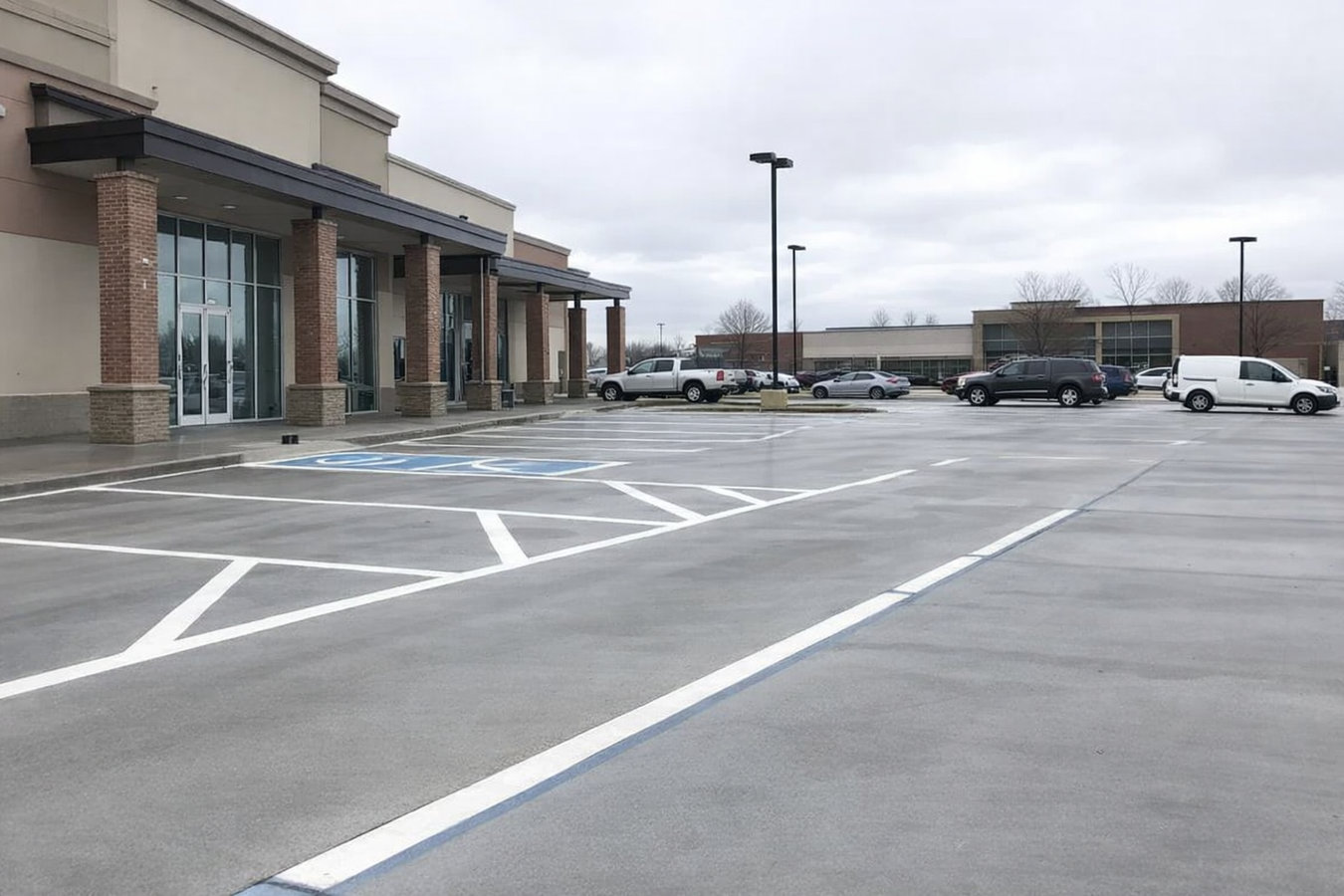
Tired of mud, gravel migration, or a crumbling parking area? We build concrete parking lots in Charleston that drain correctly, hold up through West Virginia winters, and last for decades.
Concrete parking lot building in Charleston, WV starts with site preparation - grading the ground, compacting a gravel base, and forming the lot edges - then moves to pouring and finishing the concrete in sections. Most residential and small commercial lots take two to five days of active construction, plus a seven-day vehicle curing period after the pour.
The base underneath the concrete matters as much as the pour itself. In Charleston, where clay-heavy soils shift with moisture and freeze-thaw cycles crack surfaces every winter, a properly compacted gravel base is not optional - it is the reason a lot lasts 30 to 50 years instead of cracking within five. Many property owners upgrading their parking area also ask about concrete footings if they are building a structure nearby at the same time.
We handle everything from permit to pour. You get a written estimate before we start and a finished surface that drains away from your property the way it should.
If you have patched cracks before and they keep reappearing, the surface is past the point of repair. In Charleston's climate, freeze-thaw cycles accelerate this process every winter - water gets into hairline cracks, freezes, expands, and widens them. A surface that is cracking in multiple places is losing structural integrity underneath, not just on top.
Standing water that does not drain within an hour or two of a rainstorm means the lot's slope or drainage is failing. In a city as rainy as Charleston, pooled water works its way under the surface, softens the base, and speeds up cracking and settling. A new lot built with proper grading solves this problem at the source.
When chunks are breaking off, the surface feels rough and uneven underfoot, or you can see the gravel aggregate underneath, the concrete has reached the end of its useful life. Patching at this stage is putting a bandage on a structural problem - the right answer is a new pour built to last.
If parts of your parking area feel like they give slightly underfoot, or if you can see areas that have risen or sunk unevenly, the ground beneath the surface is shifting. In Charleston's clay-heavy soils, this means the base has failed and the surface above it will follow. This is a replacement situation, not a repair.
We build new concrete parking lots and replace failing ones. For new construction, we start from bare ground - assessing slope and drainage, excavating, compacting a gravel base, setting forms, and pouring in sections sized for your lot. For replacements, we remove the existing surface first, then follow the same base preparation process. Every job includes control joint cuts to give the concrete a place to flex with temperature changes instead of cracking across the middle of slabs. Homeowners and business owners who need both a lot and a new approach to their property access often combine this work with concrete driveway building to handle the whole entry at once.
After the pour and cure, we apply a penetrating sealer to protect the surface from water intrusion and road salt damage. In Charleston's freeze-thaw climate, sealing every two to three years is the single most effective maintenance step you can take to extend the life of your lot. We can handle that follow-up maintenance work too - not just the initial build.
Suited for homeowners or businesses converting a gravel or dirt area to a permanent paved surface.
Suited for existing lots that are cracking, heaving, or draining poorly and are past the point of patching.
Suited for properties with slope or drainage challenges where water management is part of the build from the start.
Suited for owners with an existing concrete lot who want to extend its life through proper protective treatment.
Charleston sits in a climate that is genuinely hard on pavement. Temperatures regularly swing above and below freezing through winter and into early spring, and the city averages about 44 inches of rain per year. That combination - frequent freeze-thaw cycles and high annual rainfall - is why the quality of the initial pour, the depth of the gravel base, and the slope of the finished surface matter more here than they might in a drier or warmer climate. The hilly terrain across much of the Charleston area also means drainage is never a given - a lot that looks level may still collect water without proper grading. Homeowners in Nitro and Cross Lanes face the same conditions and benefit from the same attention to base preparation and drainage design.
The Kanawha Valley's clay-heavy soils add another layer of complexity. Clay expands when wet and contracts when dry - movement that stresses a concrete slab from below the same way freeze-thaw cycles stress it from above. A properly compacted gravel base layer separates the concrete from that soil movement and gives water a path to drain rather than sit under the slab. This is the step that separates a parking lot that lasts 30 years from one that needs major repairs in five. We also handle the City of Charleston permit process on your behalf, so you are not navigating that paperwork yourself. The American Concrete Pavement Association sets the industry standards we follow for base preparation and pavement design.
We respond within one business day and schedule an on-site visit - not a phone quote. We walk your property, check the slope and drainage, and discuss how the lot will be used. You get a written estimate, not just a verbal number.
Once you approve the estimate, we apply for the required building permit with the City of Charleston. Permit processing typically takes a few days to a couple of weeks. We handle this - you should not need to visit any office yourself.
The crew removes any existing surface, excavates to the right depth, and compacts a gravel base layer. This step takes one to two days and is the foundation of everything that follows. Clear the area of vehicles and stored items before the crew arrives.
We set forms, pour the concrete, finish the surface, and cut control joints. Keep vehicles off the new surface for a full seven days - driving on it too soon is one of the most common causes of surface damage. We provide written curing instructions before we leave.
Free on-site estimates. Written pricing before we start. No pressure, no surprises.
(304) 414-0098The City of Charleston requires permits for most parking lot construction, and permitted work is inspected by the city - which protects you if anything is not done to standard. We handle the permit application and coordinate the inspection, so you are not navigating that process yourself.
Clay-heavy soils in the Kanawha Valley shift with moisture changes. We size and compact the gravel base for your specific site conditions, not a one-size-fits-all depth. That preparation is what keeps a lot from cracking prematurely in this area's soil and climate.
We use concrete mixes suited to Charleston's winter climate and recommend sealing after the cure. Sealing every two to three years is the most cost-effective maintenance step for a parking lot in this region. We can schedule that follow-up maintenance so it does not fall through the cracks.
Every project starts with an on-site visit and a written scope and price. You know what you are getting and what it costs before anyone picks up a shovel. We serve homeowners and businesses across Charleston and Kanawha County, and our license status is verifiable through the West Virginia Division of Labor.
We know the permit process, the soil conditions, and the climate challenges that define parking lot work in Charleston. That local knowledge shows up in every phase of the job, from the grading plan to the sealer we recommend at the end.
Structural concrete footings for decks, additions, and outbuildings - sized for Charleston's frost depth and soil conditions.
Learn MoreNew concrete driveways built to handle West Virginia winters, from gravel base through finished surface and sealer.
Learn MoreCrews book quickly once the weather turns - reach out now to lock in your project date before the spring rush fills up.