Loading...
Serving Charleston, WV and surrounding areas. (304) 414-0098
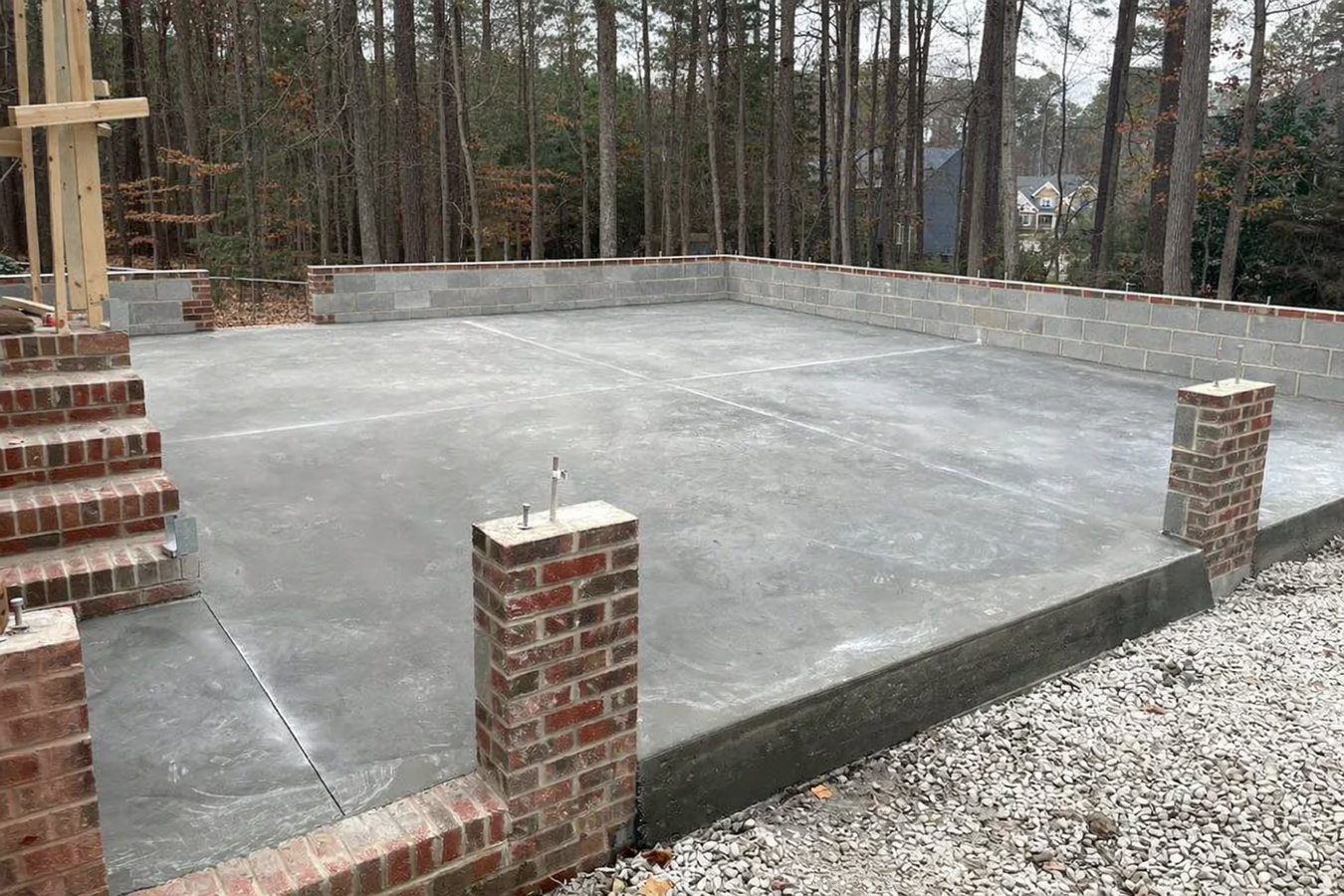
Your foundation is the most important concrete your home will ever have. We get the site prep, reinforcement, and pour right from the start.
Slab foundation building in Charleston involves excavating and leveling the site, compacting a gravel base, laying steel reinforcement, and pouring the concrete in a single session - most residential slabs are ready for framing within one to two weeks of the pour.
Charleston sits in a hilly river valley with clay-heavy soil that expands and contracts with the seasons. That means every slab we build here requires more planning than a flat suburban site - proper grading, the right base depth, and reinforcement matched to your specific lot. If you are building a new garage, an addition, or a new home on a vacant lot, getting the foundation right is the decision that affects everything else.
If your project also needs concrete steps or an entry area, take a look at our concrete steps construction service - many foundation jobs include exterior step work as part of the same project.
If you are adding a garage, room addition, workshop, or new home on a vacant lot, a slab foundation is the first step before framing can begin. Without a properly built slab, there is nothing solid for the walls and roof to rest on. You simply cannot move forward with the build until the foundation is in place.
Small hairline cracks are common, but cracks wider than a quarter-inch, diagonal cracks running across the floor, or cracks that seem to be getting bigger are a warning sign. In Charleston, the clay-heavy soil expands and contracts with the seasons, putting ongoing stress on older slabs. If cracks look worse after a wet winter, have a contractor take a look.
If a door is sticking, furniture rocks on what used to be a flat surface, or you can feel a dip when you walk across a room, the slab beneath may have shifted. Charleston's hilly terrain and variable soil conditions make settling more common here than in flatter regions. A slab that has moved significantly may need replacement rather than patching.
Charleston gets around 44 inches of rain a year, and if water consistently collects against the edge of your foundation after a storm, it is finding its way into places it should not be. Over time, that moisture can undermine the soil beneath the slab and cause it to shift or crack. Persistent pooling near your foundation is worth a contractor assessment.
We build residential and light commercial slab foundations throughout the Charleston area. Every project starts with an in-person site visit so our quote reflects your actual lot conditions - not a ballpark built for a flat suburban property. We handle the permit application, the base preparation, the steel reinforcement layout, the pour, and the curing process from start to finish. If your project involves a full foundation installation with walls and footings, we handle that too.
For projects that need underground support before the slab goes in, our concrete footings work is designed to work alongside the slab build - so both elements are engineered and poured together rather than handed off between separate crews.
Built for homeowners breaking ground on a new home, garage, or addition on a previously undeveloped lot.
Ideal for detached garages, workshops, and storage buildings where you need a clean, level concrete floor and a stable base.
Sized and tied into your existing structure for homeowners expanding their living space with a ground-level addition.
For properties where the existing slab has settled, cracked significantly, or is no longer structurally adequate for the load above it.
Charleston sits in the Kanawha Valley surrounded by steep hillsides, and many residential lots across the city are sloped or terraced rather than flat. Building a slab on an uneven lot requires more excavation and grading than a flat suburban site - and that is where corners get cut if the contractor underbid the job and needs to make up the margin. We assess your specific property before we quote, so the price you receive reflects the actual work your lot requires.
The clay-heavy soil in much of the Kanawha Valley also expands when wet and shrinks when dry. That seasonal movement puts stress on any slab poured without accounting for it. We build in proper base depth, reinforcement, and drainage from the start - because a slab that ignores local soil is a slab that will need attention again in a few years. Homeowners in South Charleston and Dunbar deal with the same conditions, and we bring the same approach to every job across the region.
We reply within one business day. We will ask basic questions about your project - what you are building, roughly how large, and where your property is located.
A crew member visits your property before we give you a price. Charleston lots vary too much for a reliable phone estimate - a site visit means no surprises on the bill.
We handle the City of Charleston building permit on your behalf. Once approved, we excavate, grade, and compact a stable base - the work your specific lot actually requires.
Steel reinforcement goes in, then the pour. After curing, we walk you through the finished slab before we leave - including the control joints and what to expect over the coming weeks.
No pressure, no obligation. We visit your property in person and give you a clear number before any work begins.
(304) 414-0098Foundation work in Charleston requires a city building permit - and we handle the application from start to finish. A permit means inspections, and inspections mean an independent check on the work before it is buried. You will not be left with unpermitted concrete that complicates a future sale.
We visit your property before we quote. On Charleston's sloped lots, a phone estimate is almost always wrong - either too low because the contractor did not see the grade, or padded to cover the unknown. Our price reflects what your lot actually requires.
Clay-heavy soil and wet winters are not unusual here - they are the norm. We adjust base depth, reinforcement, and drainage on every project to match what is actually under your feet, not a generic residential spec. You can verify concrete standards through the American Concrete Institute.
West Virginia requires contractors to hold a valid license for work above a certain dollar threshold. You can check license status through the West Virginia Division of Labor before you sign anything. We welcome that kind of due diligence.
Every one of these points comes down to the same thing: a foundation job done right is one you never have to think about again. That is what we are aiming for on every project.
Full foundation systems with walls, footings, and drainage for new homes and major rebuilds in Charleston.
Learn MoreUnderground footing work that supports load-bearing walls, columns, and deck posts on Charleston's varied terrain.
Learn MoreSpring and fall booking windows fill fast in Charleston - reach out today to lock in your start date before the season gets away from you.