Loading...
Serving Charleston, WV and surrounding areas. (304) 414-0098
Old concrete cracking, flaking, or no longer level? We replace and pour garage floors built to handle Charleston winters and the clay soils underneath.
Garage floor concrete in Charleston, WV involves breaking out the old slab, preparing and compacting the base, and pouring fresh concrete with proper control joints and drainage. Most jobs take one to two days of active work, and you can park in the garage again within a week.
If you have cracked concrete that keeps reopening no matter how many times you patch it, the problem is almost always in the base - not the surface. Charleston's clay-heavy soils shift with the seasons, and no amount of filler fixes a floor that is moving underneath. A full replacement, done right, gives you a stable floor that does not need constant attention.
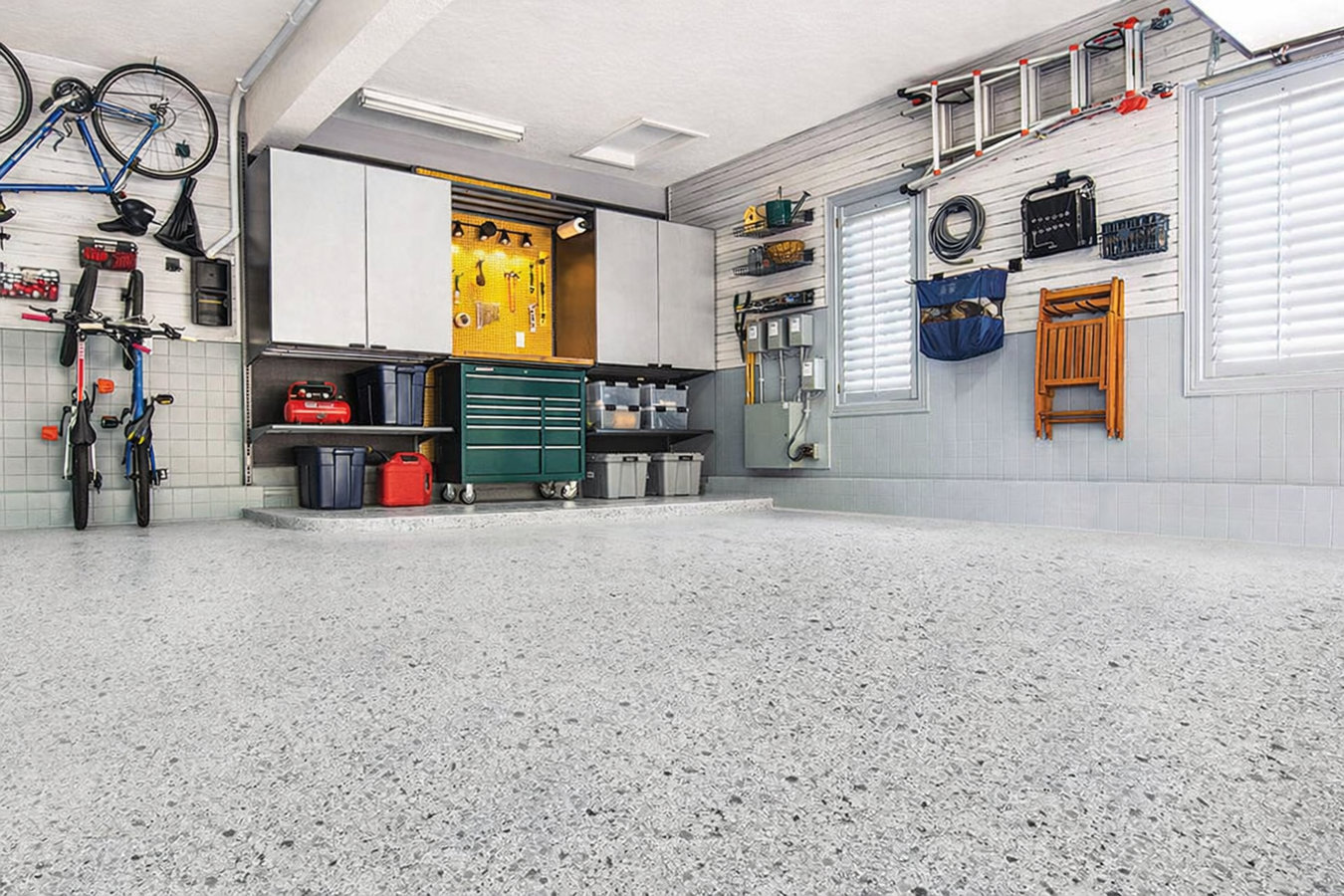
Many homeowners in the area pair their garage floor replacement with decorative concrete finishes - adding color or a protective epoxy coat at the same time since the floor is already out of service.
If you have filled cracks before and they keep reopening - or new ones keep appearing nearby - the base underneath is shifting. In Charleston's clay soils, no amount of patching fixes a floor that is moving. A full replacement is the honest solution.
When the top layer starts peeling off in thin chips, the surface was damaged by repeated freeze-thaw cycles. This is especially common in Charleston homes with older, unsealed floors. Once the surface starts breaking down this way, it accelerates - and the floor becomes harder to clean.
A floor that dips in one corner or rises in another is telling you the ground underneath has shifted. Many homeowners do not notice until a door stops closing right or they see a gap under the wall. In Charleston's hilly neighborhoods, seasonal settling is not unusual - but it is worth addressing.
If the floor always seems slightly damp or you see white chalky film building up, moisture is working up through the concrete from below. Charleston's high annual rainfall makes this more common here than in drier regions. Left alone, that moisture can weaken the slab and create conditions for mold.
We handle the full job from start to finish: demolition and removal of the old slab, base grading and compaction with a proper gravel drainage layer, and a fresh pour finished with control joints cut in the right places. For homeowners who want a more durable or cleaner-looking floor, we also discuss protective finishes and sealers once the concrete has cured. If you are considering a concrete floor installation elsewhere in the home - a basement, a shop space, or a utility room - we can scope that work at the same time.
We work on garages of all sizes, from single-car attached garages in older Charleston neighborhoods to detached two-car garages and larger workshop spaces. Every job gets the same base preparation - because that is what determines how long the floor lasts, not just the pour itself.
Best for floors with recurring cracks, settling, or damage that goes deeper than the surface. We remove the old concrete and start fresh with a properly prepared base.
Suits homeowners adding a new garage or finishing an existing one. We pour the floor to the correct thickness for your expected vehicle load and use.
Ideal for homeowners who park trucks, RVs, or run a home workshop with heavy equipment. A thicker slab - five to six inches - prevents cracking under extra weight.
A good option for homeowners in areas with shifting soils or temperature swings. Synthetic fibers in the mix help hold the slab together if it ever does crack, reducing large chunks from breaking loose.
Charleston sits in a climate zone where temperatures drop below freezing in winter and climb into the 80s and 90s in summer. That constant expansion and contraction - water freezing in tiny cracks, then thawing - is one of the leading causes of concrete failure in this region. It means the quality of the pour and the use of a good sealer matter more here than they would in a warmer climate. A floor poured without accounting for local conditions will show it within a few years.
The clay-heavy soils common across the Kanawha Valley add another challenge. Clay swells when wet and shrinks when dry, putting pressure on whatever sits on top of it. Homeowners in areas like South Charleston and Dunbar regularly see floor problems tied to this seasonal soil movement. The fix is a properly compacted subbase with a gravel drainage layer - not just patching the surface year after year.
A significant share of Charleston-area homes were built in the mid-20th century. Many of those original garage floors were poured thin, without reinforcement, or over inadequate bases. If your home was built before the 1980s and the floor has never been replaced, it may be approaching the end of its practical life even if it does not look terrible yet. Getting a contractor's assessment costs you nothing - and it helps you make the right call before a small problem becomes a big one.
We respond within one business day. We will ask about garage size, the condition of the existing floor, and what you are hoping to accomplish - so we come prepared.
We come out to look at the existing floor, check for cracks or settling, and assess drainage. You get a written estimate with no obligation - no sales pitch, just straight answers about what the job involves and what it costs.
On day one, the crew breaks out the old concrete and removes it. Then they grade and compact the ground, adding a gravel layer to improve drainage. This prep work is what separates a floor that lasts 30 years from one that cracks in five.
Day two is the pour. Control joints are cut before the concrete hardens. You can walk on it within 24 to 48 hours and park a vehicle on it after about a week - most Charleston-area jobs are fully back in service within seven days.
No obligation estimate. We come to you, assess the floor, and give you a straight answer on cost and timeline.
(304) 414-0098We account for the freeze-thaw cycles and clay soils specific to this area in every pour - from how we prepare the subbase to how we recommend sealing after curing. A floor built for local conditions holds up longer than a generic pour.
West Virginia requires contractors to hold a state license through the Division of Labor. You can look us up, which means you have a formal path to resolution if you are ever unhappy with the outcome. That matters when you are spending thousands of dollars on your home.
We know losing garage access is a real disruption. We work efficiently, clean up after ourselves, and give you a clear schedule upfront. Most Charleston-area jobs are fully back in service within seven days of the pour.
One of the biggest homeowner concerns is finding out mid-job that conditions under the slab are worse than expected. We assess the base before we price the work and tell you exactly what we find - so the written estimate reflects the actual job.
These are not talking points - they reflect how we approach every job in Charleston and the surrounding area. When the work is done right from the base up, you should not have to think about your garage floor again for decades.
Add color, pattern, or texture to your floors and outdoor surfaces for a custom finished look.
Learn MoreNew interior concrete floors poured and finished for basements, shops, and living spaces.
Learn MorePouring season in the Kanawha Valley is limited - lock in your spot before cold weather closes the window.